

The Stay-Put Economy and What It Means for Your Renewal Strategy
As the world enters the late 2020s, industry experts are starting to dub it “the stay-put economy.” People are taking fewer risks when venturing into the property market if they already have a place, rented or not. As a landlord, it’s prime time to build more support and incentivize lease renewal.
The New Reality of the Rental Market
Saying that people are preferring to rent isn’t exactly an exaggeration. Findings show that renters stayed in their homes for six and a half years in 2024, which has gone up from the average of 5.9 years in 2019. The trend is apparent across almost all areas, but high-cost metros like New York City and those in California are seeing renters stay for seven to nine years.
There are fewer properties to go around. On top of that, only around 50% of American homeowners have interest rates of 4% or less in 2025, and about 80% are dealing with rates of 6%.
The prices and interest rates could decrease further down the line, but that would require plenty of waiting. Thus, potential homebuyers are joining the pool of tenants while waiting.

Why Landlords Must Adapt to Multiyear Tenancies
Home seekers are already eyeing rental properties. Now, it’s up to the landlord to answer the call. Ideally, they should optimize for multiyear tenant relationships to help lock these people in. For one, you wouldn’t have to worry about renter quantity and quality for a long while.
Tenant quality, especially, has been the top challenge for property managers for the past two years. In fact, 75% saw an increase in rental fraud due to substandard tenants in 2025.
Multiyear tenancies can also mitigate annual turnover cycles. Landlords can calculate turnover by checking the percentage of total housing units in a market area that are likely to change occupants in any given year. Cross-reference it with the percentage of occupants in a given apartment complex who move in each year.
Strategies for Securing Contract Renewals
Getting a contract renewal in the current property market is more imperative than ever. To achieve this, here are several strategies.
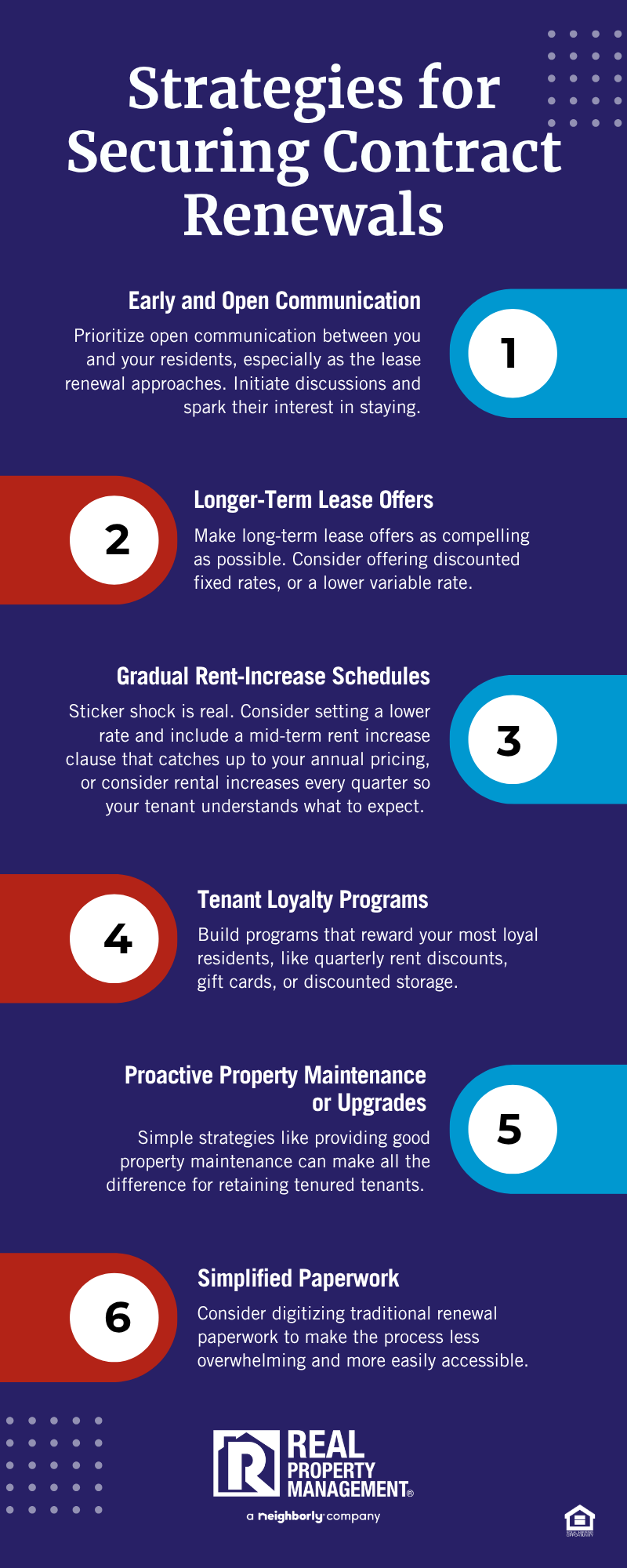
1. Early and Open Communication
Landlords and tenants should prioritize open communication to strengthen their relationships, especially as the lease renewal approaches. You have to initiate discussions about what happens next and spark their interest in staying.
Learn about any opinions or experiences that led them to stay at your rental space or put them on the fence about leaving. Knowing what makes them feel valued and comfortable can help you pinpoint your main incentives. You could also address tenant concerns to boost the likelihood of lease renewals.
2. Longer-Term Lease Offers
Longer-term leases can be a powerful tool in this stay-put economy. They already pander to renters who tend to stay at your property for a long time, while minimizing the risk of vacancies on your end. That said, tenants may choose a short-term agreement and renew it later to avoid being locked into a long-term one.
There are several ways you can make your long-term lease more compelling, though. For example, offering a discounted fixed rate can attract renters who prioritize savings. You can also highlight the stability of your rental property’s living environment over searching for a new lease.
Another strategy is to have a lower variable rent that works with the market rate. However, you have to be clear-cut in the lease agreement about how you’re going to calculate the rental raises.
3. Gradual Rent-Increase Schedules
Sticker shock often occurs when you’re hiring services and products, but it may also be evident in your rental agreement. High prices from the get-go can scare people off, so consider a more gradual approach.
For instance, set a lower rate and include a mid-term rent increase clause that catches up to your annual pricing. You can also do the rental increases every quarter so your tenant understands what to expect. Just remember to make it a fair amount and to state it in the lease clearly.
Be aware of any state or city regulations regarding the required notice periods for rent increases. In NYC, if a tenant has lived in the unit for over two years or has a lease of two years, you need to give a 90-day written notice of the increase.

4. Tenant Loyalty Programs
Cultivating long-term tenants requires intention. Build programs that reward your most loyal renters, such as quarterly rent discounts, gift cards or discounted extra storage.
You can also exercise rent payment flexibility by letting them pay in installments from time to time. Make sure you clarify the terms and conditions of being eligible for such loyalty programs. The details of the rewards should also be clearly stated.
5. Proactive Property Maintenance or Upgrades
Simple strategies like providing good property maintenance can make a world of difference for tenured tenants. In 2024, a survey found that 68% of renters had a bad relationship with their landlord due to maintenance issues. In a competitive market, you need to meet at least the bare minimum expectations.
If you want to go the extra mile, property upgrades could be next in line. Solar panels can help generate renewable energy while showcasing your dedication to sustainability. You could furnish the space with new energy-efficient appliances to further help tenants manage their bills.
6. Simplified Paperwork
Few people are in favor of paperwork. Unfortunately, lease renewals often require plenty of it. Consider digitizing the traditional paperwork to make it less overwhelming. You can send it remotely for tenant review.
Use electronic signatures to make approval even simpler. Make sure the documentation still goes through the proper validation process to make the contract official.
Focus on Tenant Retention
With more tenants staying at their rentals, it’s time for landlords to reel in long-term clients and lower annual turnover. Employ the strategies above to improve the rental experience at your property, and you could secure fruitful tenant relationships for years to come.
Build Stronger Tenant Relationships for Long-Term Success
Need help creating a tenant retention strategy that works? Contact our team today. Real Property Management Vancouver helps landlords lease properties faster, more efficiently, and with less stress.
This content is provided for general informational and educational purposes only and does not constitute financial, legal, tax, or investment advice. Readers should consult with licensed professionals regarding their specific circumstances.
We are pledged to the letter and spirit of U.S. policy for the achievement of equal housing opportunity throughout the Nation. See Equal Housing Opportunity Statement for more information.
