

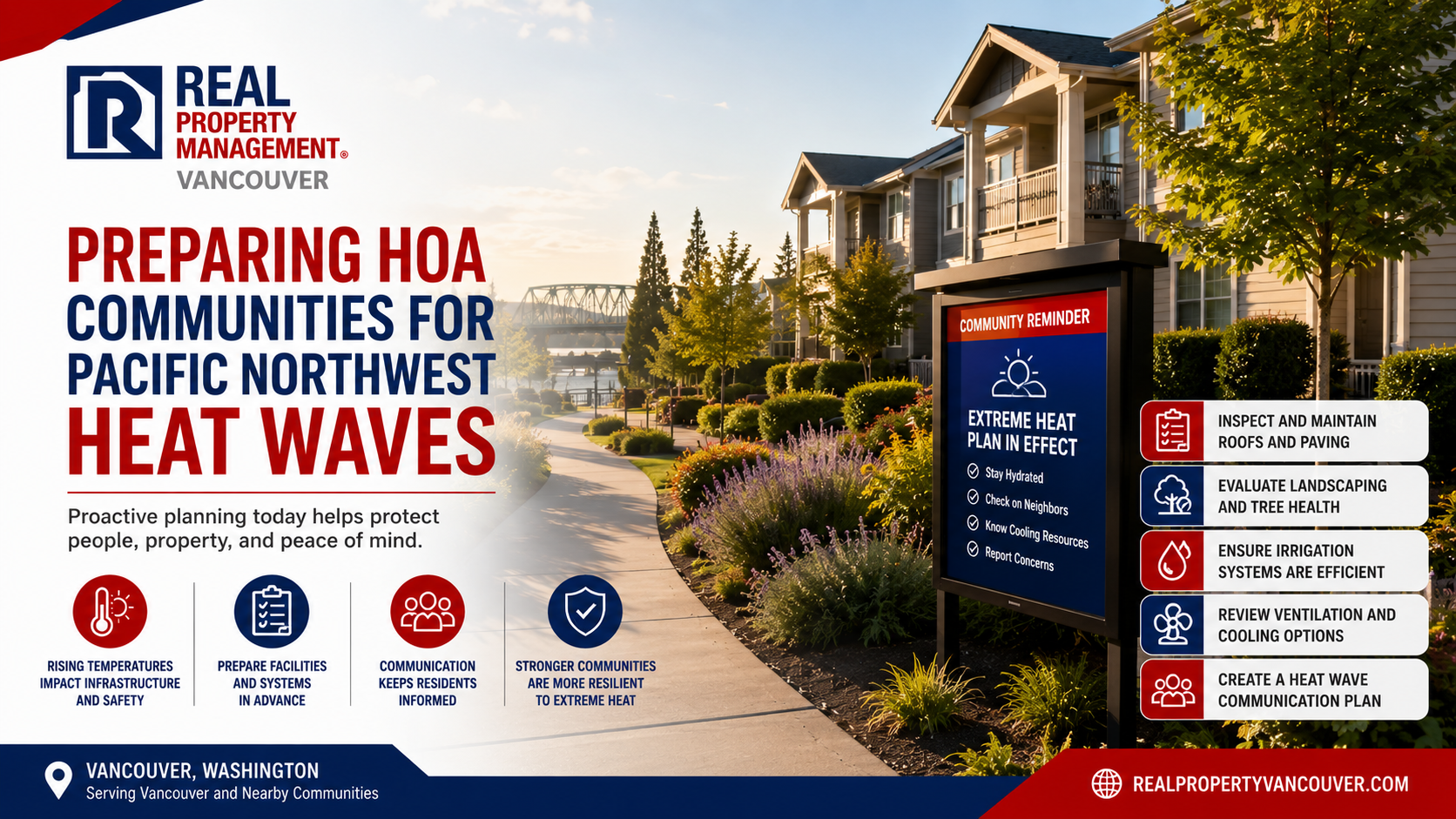
For many years, homeowners associations (HOAs) in the Pacific Northwest have focused their maintenance planning on rain, windstorms, and winter weather. However, recent summers have demonstrated that heat waves are becoming an increasingly important consideration for communities throughout Southwest Washington.
In Vancouver, Washington, prolonged periods of high temperatures can place stress on landscaping, irrigation systems, buildings, paved surfaces, and community amenities. More importantly, extreme heat can create health and safety concerns for residents, particularly older adults, young children, and individuals with underlying medical conditions.
Preparing for summer heat waves isn’t simply about responding to hot weather—it’s about developing a proactive maintenance and emergency preparedness strategy that protects residents, preserves community assets, and minimizes unexpected expenses.
Why Heat Wave Preparedness Matters
Although Vancouver enjoys a relatively mild climate compared to many parts of the United States, recent years have shown that the Pacific Northwest is not immune to extreme heat events.
Heat waves can affect nearly every aspect of HOA operations, including:
- Resident safety
- Landscaping and irrigation
- Asphalt and roofing materials
- Community amenities
- Utility costs
- Emergency planning
- Vendor scheduling
Communities that prepare in advance often recover more quickly and experience fewer maintenance issues.
Understand the Risks of Extreme Heat
Heat affects both people and property.
For residents, prolonged exposure may increase the risk of:
- Heat exhaustion
- Heat stroke
- Dehydration
- Respiratory issues
- Cardiovascular stress
For HOA infrastructure, excessive heat can contribute to:
- Asphalt softening
- Roofing deterioration
- Irrigation failures
- Landscape stress
- Increased energy consumption
- Premature wear of outdoor equipment
Recognizing these risks helps HOA boards prioritize preventive actions before temperatures rise.
Review the Community’s Emergency Preparedness Plan
Summer is an excellent time for HOA boards to review emergency procedures.
Consider evaluating:
- Emergency contact lists
- Resident communication methods
- Vendor response procedures
- Cooling center information
- Emergency maintenance contacts
- Backup power availability for common facilities
An updated emergency plan enables communities to respond more efficiently during periods of extreme heat.
Communicate Heat Safety Tips to Residents
One of the simplest ways to improve community preparedness is through proactive communication.
Share reminders about:
- Staying hydrated
- Limiting outdoor activities during peak afternoon temperatures
- Checking on elderly neighbors
- Protecting pets
- Recognizing signs of heat-related illness
Providing reliable information helps residents prepare before heat advisories are issued.
Monitor Landscaping for Heat Stress
Landscaping is often one of the first community assets affected by prolonged heat.
Summer inspections should focus on:
- Brown or thinning turf
- Wilting shrubs
- Heat-stressed trees
- Irrigation coverage
- Soil moisture levels
Addressing minor problems early helps preserve curb appeal while reducing replacement costs.
Inspect Irrigation Systems Before Heat Waves
A properly functioning irrigation system is critical during hot weather.
HOA boards should ensure contractors inspect:
- Sprinkler heads
- Controllers
- Timers
- Pressure regulators
- Valves
- Underground leaks
Even small irrigation failures can quickly damage landscaping during periods of extreme heat.
Protect Shade Trees
Healthy mature trees provide one of the best natural defenses against summer heat.
Shade trees help:
- Lower surface temperatures
- Reduce cooling costs
- Improve resident comfort
- Protect playgrounds and walking paths
- Enhance community appearance
Summer inspections should identify:
- Dead branches
- Drought stress
- Pest activity
- Structural concerns
Healthy trees contribute significantly to a community’s long-term resilience.
Inspect Roofing Systems
Roof surfaces absorb significant solar heat.
Routine inspections should evaluate:
- Shingle condition
- Flashing
- Sealants
- Roof vents
- Signs of UV deterioration
Addressing roofing issues before autumn rain arrives can reduce future repair costs.
Evaluate Asphalt and Concrete Surfaces
Parking lots, sidewalks, and private roads also experience stress during periods of high temperatures.
Heat may contribute to:
- Pavement softening
- Surface cracking
- Expansion joints separating
- Trip hazards
- Sealant deterioration
Routine pavement inspections during summer help extend the lifespan of these valuable community assets.
Review Community Amenities
Summer brings increased use of outdoor amenities.
Inspect:
- Playgrounds
- Picnic shelters
- Clubhouses
- Pools
- Walking trails
- Sports courts
Pay particular attention to:
- Surface temperatures
- Drinking water availability
- Shade structures
- Seating areas
- Safety signage
Providing shaded rest areas improves resident comfort during hot weather.
Reduce Fire Risk Around Common Areas
While Vancouver is not typically classified as a high wildfire-risk community, dry summer vegetation can increase localized fire hazards.
HOA maintenance plans should include:
- Removing dry vegetation
- Trimming overgrown landscaping
- Cleaning debris around buildings
- Maintaining defensible space where appropriate
Reducing combustible materials contributes to overall community safety.
Monitor Utility Usage
Heat waves often increase electricity and water consumption.
Review:
- Irrigation water usage
- Clubhouse electricity
- Common-area HVAC systems
- Lighting efficiency
Monitoring utility trends helps identify unusual spikes that may indicate equipment problems.
Encourage Residents to Report Maintenance Concerns
Residents often notice developing issues before routine inspections occur.
Encourage homeowners to report:
- Irrigation leaks
- Damaged pavement
- Broken shade structures
- Tree hazards
- Malfunctioning lighting
- Water system concerns
Prompt reporting helps prevent small issues from becoming expensive repairs.
Coordinate With Vendors Before Peak Summer
Summer is one of the busiest seasons for contractors.
HOA boards should schedule:
- Landscaping
- Irrigation inspections
- Tree care
- Roof inspections
- Pavement maintenance
Early scheduling helps avoid delays during periods of high demand.
Budget for Heat-Related Maintenance
Heat waves can increase maintenance expenses.
Mid-year financial reviews should consider funding for:
- Irrigation repairs
- Tree maintenance
- Landscape improvements
- Pavement preservation
- Roof inspections
- Emergency repairs
Planning ahead reduces the likelihood of unexpected budget adjustments later in the year.
Develop a Summer Heat Wave Checklist
Many HOA boards benefit from creating an annual checklist.
Include items such as:
Resident Safety
- Emergency contacts updated
- Resident notifications prepared
- Cooling resources identified
Landscaping
- Irrigation inspected
- Trees evaluated
- Turf monitored
Infrastructure
- Roof inspections completed
- Pavement inspected
- Exterior lighting checked
Amenities
- Shade areas inspected
- Drinking fountains functioning
- Playground equipment evaluated
A standardized checklist improves consistency from year to year.
The Role of Professional HOA Management
Preparing for heat waves requires coordination across maintenance planning, resident communication, budgeting, and vendor management.
Professional HOA management can assist boards by:
- Coordinating seasonal inspections
- Managing maintenance vendors
- Developing preventive maintenance schedules
- Supporting emergency preparedness planning
- Communicating with homeowners
- Monitoring long-term infrastructure needs
An experienced local management company can help HOA boards stay organized while ensuring the community remains prepared for changing seasonal conditions.
Heat waves are becoming an increasingly important consideration for HOA communities throughout the Pacific Northwest. While Vancouver’s climate remains relatively moderate, periods of unusually high temperatures can affect landscaping, infrastructure, community amenities, and resident well-being.
By preparing before temperatures rise, HOA boards can protect community assets, reduce maintenance costs, improve resident safety, and strengthen long-term resilience.
If your association is reviewing its seasonal maintenance strategy or developing an emergency preparedness plan, exploring educational resources and best practices can help your board make informed decisions that benefit the entire community. The Real Property Management Vancouver website also offers additional resources and information for HOA boards seeking guidance on community management and long-term maintenance planning.
SEO Section
Meta Title
Preparing HOA Communities for Pacific Northwest Heat Waves | Vancouver, WA
Meta Description
Learn how HOA communities in Vancouver, WA can prepare for Pacific Northwest heat waves through proactive maintenance, emergency planning, landscaping care, and infrastructure protection.
Target SEO Keywords
- Pacific Northwest heat waves
- HOA heat wave preparedness
- Vancouver WA HOA maintenance
- HOA emergency planning
- HOA summer maintenance
- HOA landscaping maintenance
- Community association management Vancouver WA
- HOA infrastructure maintenance
- HOA preventive maintenance
Suggested Tags
- HOA Management
- HOA Maintenance
- Heat Waves
- Vancouver WA
- Community Safety
- Preventive Maintenance
- Landscaping
- Emergency Preparedness
Suggested Categories
- HOA & Community Management
- Property Maintenance
- Emergency Preparedness
- Seasonal Maintenance
This content is provided for general informational and educational purposes only and does not constitute financial, legal, tax, or investment advice. Readers should consult with licensed professionals regarding their specific circumstances.
We are pledged to the letter and spirit of U.S. policy for the achievement of equal housing opportunity throughout the Nation. See Equal Housing Opportunity Statement for more information.
