

Spring often brings renewed energy to homeowners association (HOA) communities. Residents begin landscaping projects, exterior improvements, seasonal cleanups, and outdoor activities—all of which can increase the number of HOA rule violations if expectations are unclear or inconsistently enforced.
For HOA boards in Vancouver, Washington, spring is an ideal time to review enforcement policies and ensure violations are handled fairly, professionally, and consistently.
Effective HOA rule enforcement is not about punishment—it’s about maintaining community standards, protecting property values, and fostering a respectful living environment for everyone.
Why Fair HOA Rule Enforcement Matters
Rules and regulations help communities operate smoothly, but enforcement must be balanced and transparent.
Fair enforcement helps:
- Maintain property values
- Protect community aesthetics
- Reduce conflicts between neighbors
- Promote consistency and accountability
- Build trust between residents and HOA boards
Inconsistent or overly aggressive enforcement, on the other hand, can quickly lead to disputes and frustration.
Common Spring HOA Violations
As warmer weather arrives in Vancouver, Washington, HOAs often see an increase in seasonal violations.
Common examples include:
- Overgrown lawns or landscaping neglect
- Unauthorized exterior modifications
- Improper trash bin storage
- Parking violations
- Fence or paint maintenance issues
- Noise complaints from outdoor gatherings
Many violations stem from misunderstandings rather than intentional noncompliance.
Start with Clear and Updated HOA Rules
Before enforcing rules, HOA boards should ensure policies are current, accessible, and clearly communicated.
Review:
- CC&Rs (Covenants, Conditions & Restrictions)
- Community rules and guidelines
- Architectural standards
- Seasonal maintenance requirements
Questions to Ask:
- Are the rules easy to understand?
- Are they still relevant?
- Are enforcement procedures clearly outlined?
Clear documentation reduces confusion and improves compliance.
Communicate Expectations Early in the Season
Spring is the perfect time to remind residents about seasonal expectations.
Effective communication methods:
- Community newsletters
- Email reminders
- HOA portals or websites
- Bulletin boards and signage
Helpful topics to cover:
- Lawn and landscaping maintenance
- Exterior home upkeep
- Approved improvement procedures
- Parking and common area rules
Proactive communication can prevent many violations before they occur.
Apply Rules Consistently
Consistency is one of the most important aspects of fair enforcement.
Avoid:
- Selective enforcement
- Favoritism
- Inconsistent penalties
When similar violations receive different responses, homeowners may lose trust in the HOA board.
Best Practice:
Create standardized enforcement procedures for all residents.
Document Everything Properly
Thorough documentation protects both the HOA and homeowners.
Important records include:
- Photos of violations
- Dates and inspection notes
- Copies of notices sent
- Communication history
- Hearing records and resolutions
Proper records also help ensure compliance with Washington State HOA laws.
For guidance on Washington HOA statutes, visit Washington State Legislature
This resource from the Washington State Legislature outlines legal requirements for common interest communities.
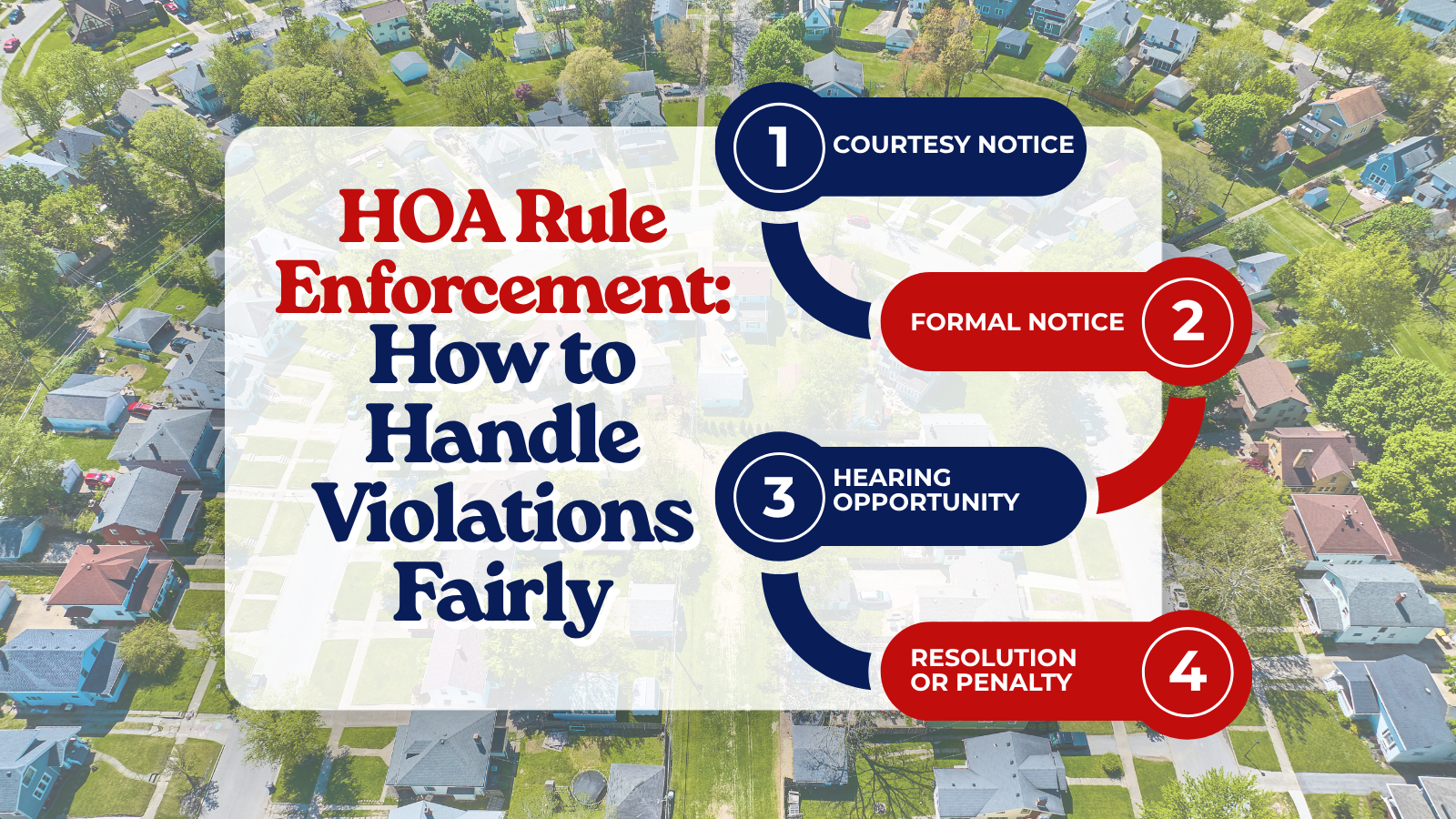
Follow a Fair Violation Process
A structured enforcement process promotes fairness and transparency.
Step 1: Courtesy Notice
Many violations can be resolved through a simple reminder.
Include:
- Description of the issue
- Relevant HOA rule
- Timeline for correction
Friendly communication often resolves problems quickly.
Step 2: Formal Notice
If the issue continues, send a formal violation notice.
The notice should include:
- Details of the violation
- Required corrective action
- Deadline for compliance
- Information about possible next steps
Step 3: Hearing Opportunity
Homeowners should have an opportunity to explain or dispute the violation.
Benefits of hearings:
- Encourages transparency
- Reduces misunderstandings
- Demonstrates fairness
Step 4: Resolution or Penalty
If necessary, the HOA may impose fines or corrective measures according to governing documents and state law.
Penalties should always:
- Follow established policies
- Be reasonable and documented
- Be applied consistently
Avoid Common HOA Enforcement Mistakes
Even well-meaning boards can encounter challenges during enforcement.
1. Emotional or Reactive Enforcement
Enforcement should remain professional and objective—not personal.
2. Poor Communication
Unclear notices or delayed responses can escalate disputes.
3. Lack of Documentation
Without records, enforcement actions may become difficult to defend.
4. Ignoring Minor Issues for Too Long
Small problems can become larger community concerns when left unresolved.
Encourage Voluntary Compliance
The goal of enforcement should be community cooperation—not conflict.
Ways to encourage compliance:
- Educate residents about rules
- Share seasonal reminders
- Recognize well-maintained properties
- Foster positive community relationships
Communities often respond better to respectful communication than aggressive enforcement.
How Professional HOA Management Can Help
Rule enforcement can be time-consuming and emotionally challenging for volunteer boards.
Professional management support can assist with:
- Conducting inspections
- Tracking violations and documentation
- Communicating with residents
- Coordinating hearings and notices
- Ensuring consistency and compliance
An experienced local provider like Real Property Management Vancouver can help HOA boards maintain community standards while reducing administrative burden.
Spring Is the Perfect Time to Reassess Enforcement Policies
As communities become more active during spring, HOA boards should review:
- Existing enforcement procedures
- Communication strategies
- Recordkeeping systems
- Seasonal maintenance expectations
A proactive approach can reduce disputes and improve community relationships throughout the year.
Final Thoughts
Fair and consistent HOA rule enforcement is essential for maintaining organized, attractive, and harmonious communities.
For HOA boards in Vancouver, Washington, spring offers the perfect opportunity to refresh enforcement procedures, improve communication, and encourage positive homeowner participation.
By focusing on transparency, consistency, and professionalism, communities can handle violations more effectively while maintaining trust and cooperation among residents.
If your association is looking for ways to streamline operations and improve community management processes, exploring trusted local resources can be a valuable next step.
This content is provided for general informational and educational purposes only and does not constitute financial, legal, tax, or investment advice. Readers should consult with licensed professionals regarding their specific circumstances.
We are pledged to the letter and spirit of U.S. policy for the achievement of equal housing opportunity throughout the Nation. See Equal Housing Opportunity Statement for more information.
