

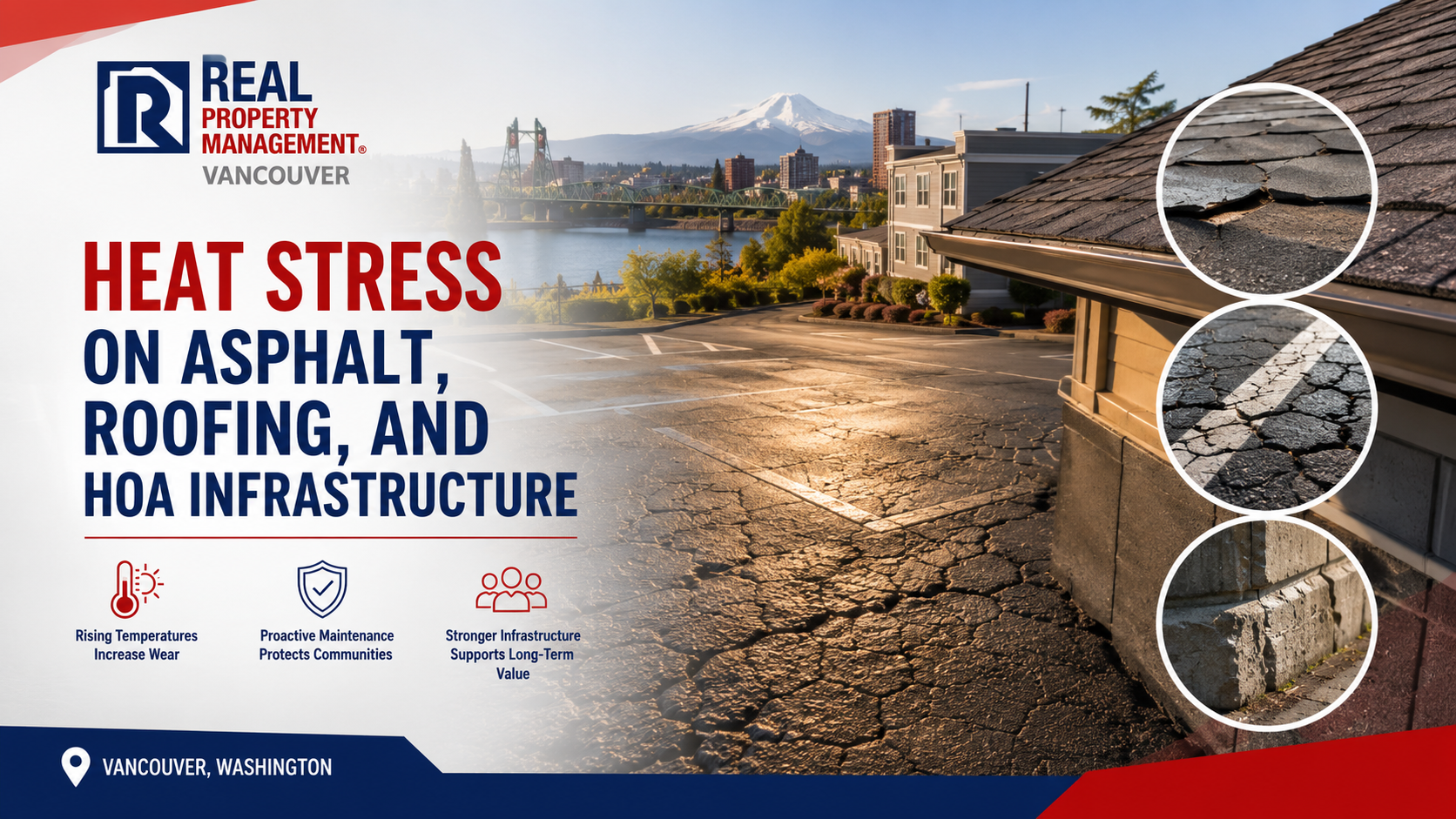
Summer is often viewed as the ideal season for homeowners associations (HOAs) to complete maintenance projects, improve curb appeal, and enjoy outdoor community spaces. However, the same warm, dry weather that creates favorable working conditions can also place significant stress on community infrastructure.
In Vancouver, Washington, summer temperatures are generally moderate compared to other parts of the country, but prolonged periods of sunshine, occasional heat waves, and increased ultraviolet (UV) exposure can gradually affect asphalt, roofing systems, sidewalks, fencing, and other common-area assets. Left unaddressed, this seasonal wear can lead to costly repairs and shorten the lifespan of community infrastructure.
Understanding how heat affects HOA-managed assets allows boards to schedule preventive maintenance, protect reserve funds, and preserve property values throughout the community.
Why Summer Heat Matters for HOA Infrastructure
Many building materials naturally expand, contract, and age over time. During the summer, these processes often accelerate because of higher surface temperatures and prolonged UV exposure.
Even on a mild 85°F day, dark-colored surfaces such as asphalt parking lots and roofing materials can reach temperatures well above 140°F.
These elevated temperatures can contribute to:
- Premature material deterioration
- Surface cracking
- Sealant failure
- Fading and discoloration
- Increased maintenance needs
While individual issues may seem minor, they can compound over several seasons if preventive maintenance is delayed.
Asphalt Parking Lots and Private Roads
Parking lots and private roads are among the most valuable infrastructure assets maintained by many HOAs.
How Heat Affects Asphalt
Summer heat softens asphalt, making it more susceptible to:
- Surface cracking
- Rutting under vehicle weight
- Oxidation from UV exposure
- Fading
- Water intrusion through expanding cracks
Once water enters small cracks, future freeze-thaw cycles can significantly accelerate pavement deterioration.
Preventive Asphalt Maintenance
HOA boards should schedule regular pavement inspections during summer.
Recommended practices include:
- Crack sealing
- Sealcoating when appropriate
- Repairing potholes early
- Restricting heavy vehicle traffic where possible
- Monitoring drainage around paved surfaces
Addressing small pavement issues early often costs significantly less than complete resurfacing.
Roofing Systems Face Constant UV Exposure
Roofs experience some of the harshest environmental conditions during summer.
Common Heat-Related Roofing Issues
- Shingle curling
- Granule loss
- Drying and cracking
- Flashing deterioration
- Sealant breakdown
- Expansion and contraction around roof penetrations
Even roofs that appear to be in good condition may develop hidden issues over time.
Routine inspections during summer help identify concerns before autumn rains arrive.
Flat Roof Considerations
Some condominium and clubhouse buildings feature flat or low-slope roofing systems.
These roofs may experience:
- Ponding after unexpected rainfall
- Membrane deterioration
- UV damage
- Expansion around seams
Professional inspections can help extend roof lifespan and reduce emergency repairs.
Concrete Sidewalks and Walkways
Concrete surfaces also respond to seasonal heat.
Potential concerns include:
- Expansion
- Minor cracking
- Uneven joints
- Trip hazards
- Surface deterioration
Although concrete is highly durable, early repairs help prevent larger structural problems.
Sidewalk inspections should remain part of every summer maintenance program.
Fencing and Community Gates
Wood, vinyl, and metal fencing all react differently to heat.
Wood Fences
Heat and UV exposure can lead to:
- Drying
- Warping
- Cracking
- Fading
Routine sealing and staining help protect wood from seasonal weather.
Vinyl Fencing
Extreme heat may contribute to:
- Expansion
- Minor warping
- Brittleness over time
Metal Gates
Metal components should be inspected for:
- Hardware loosening
- Protective coating deterioration
- Expansion affecting gate alignment
Exterior Paint and Building Finishes
Summer sunlight gradually affects exterior finishes throughout the community.
Common issues include:
- Paint fading
- Peeling
- Caulking deterioration
- Trim damage
- UV discoloration
Routine inspections allow HOA boards to schedule repainting before moisture damage develops.
Community Amenities Experience Increased Wear
Summer also brings heavier resident use of shared amenities.
These may include:
- Clubhouses
- Pools
- Playgrounds
- Sports courts
- Picnic shelters
- Walking trails
Higher usage means maintenance schedules may need adjustment throughout the season.
Regular inspections help identify safety concerns before they become liability issues.
Irrigation Systems Work Harder During Summer
Extended dry periods increase irrigation demands.
HOA boards should monitor:
- Sprinkler performance
- Water pressure
- Controller settings
- Leaks
- Broken sprinkler heads
Proper irrigation protects landscaping while helping control utility costs.
Trees Can Also Be Affected by Heat
Although mature trees provide valuable shade, prolonged dry conditions can stress even established landscapes.
Summer inspections should evaluate:
- Dead branches
- Signs of drought stress
- Pest activity
- Tree stability
- Irrigation around root zones
Healthy trees contribute significantly to curb appeal while helping reduce surface temperatures throughout the community.
Inspect Drainage Systems Before Fall
Summer offers an excellent opportunity to inspect drainage infrastructure before the return of seasonal rainfall.
Review:
- Catch basins
- Culverts
- Storm drains
- Swales
- Gutter systems
Removing debris during dry weather helps reduce flooding risks later in the year.
Budgeting for Heat-Related Maintenance
Preventive maintenance is often far less expensive than emergency repairs.
Mid-year budget reviews should consider funding for:
- Asphalt repairs
- Roof inspections
- Sealant replacement
- Exterior painting
- Irrigation improvements
- Tree maintenance
Communities that invest consistently in maintenance often experience lower long-term reserve expenditures.
Develop a Summer Infrastructure Inspection Checklist
Many HOA boards benefit from conducting comprehensive inspections during summer.
A seasonal checklist might include:
Pavement
- Cracks
- Drainage
- Parking striping
Roofing
- Flashing
- Shingles
- Gutters
Buildings
- Paint
- Caulking
- Siding
Landscaping
- Trees
- Irrigation
- Plant health
Amenities
- Playgrounds
- Pools
- Clubhouses
Routine inspections help prioritize maintenance projects before small concerns become major repairs.
Educate Residents About Summer Maintenance
Homeowners can also play a role in protecting community infrastructure.
Encourage residents to report:
- Pavement damage
- Roof leaks
- Broken irrigation
- Sidewalk hazards
- Failing exterior lighting
- Damaged community amenities
Prompt reporting allows issues to be addressed quickly.
The Role of Professional HOA Management
Managing seasonal maintenance across an entire community requires careful planning, vendor coordination, financial oversight, and consistent communication.
Professional HOA management can assist boards by:
- Coordinating infrastructure inspections
- Managing maintenance schedules
- Overseeing vendor contracts
- Planning reserve expenditures
- Tracking repair histories
- Communicating projects with residents
An experienced local provider like Real Property Management Vancouver can help communities implement preventive maintenance strategies that protect infrastructure and support long-term financial planning.
For information about pavement preservation, infrastructure maintenance, and asset management best practices, visit American Public Works Association (APWA)
The American Public Works Association provides educational resources on infrastructure management, maintenance planning, and public asset preservation that can also benefit HOA boards.
Summer is one of the best times for HOA boards to evaluate the condition of community infrastructure. While Vancouver’s climate is generally moderate, heat, sunlight, and increased resident activity still place measurable stress on asphalt, roofing systems, exterior finishes, landscaping, and shared amenities.
By prioritizing inspections, scheduling preventive maintenance, and planning for future repairs, HOA boards in Vancouver, Washington can extend the lifespan of community assets, protect reserve funds, and maintain the attractive appearance residents expect.
If your association is reviewing its summer maintenance priorities or looking for guidance on long-term infrastructure planning, exploring the educational resources available through our resource page that can you make more informed decisions for their community.
This content is provided for general informational and educational purposes only and does not constitute financial, legal, tax, or investment advice. Readers should consult with licensed professionals regarding their specific circumstances.
We are pledged to the letter and spirit of U.S. policy for the achievement of equal housing opportunity throughout the Nation. See Equal Housing Opportunity Statement for more information.
