

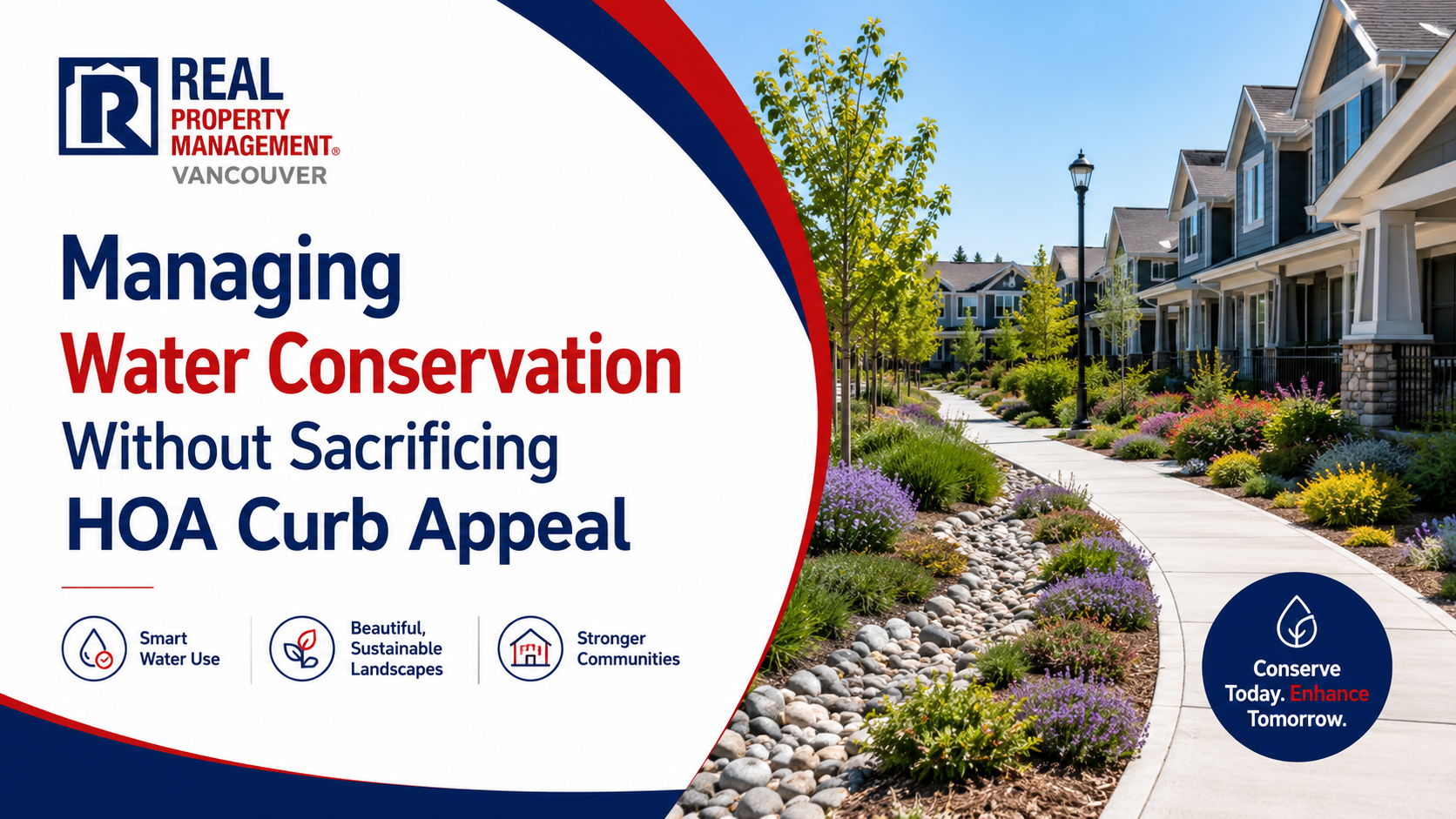
Beautiful landscaping has long been a hallmark of well-managed homeowners associations (HOAs). Lush lawns, healthy trees, colorful flower beds, and attractive common areas contribute to property values and create welcoming neighborhoods. However, maintaining that appearance while using water responsibly has become an increasingly important challenge for HOA boards.
Although Vancouver, Washington typically receives abundant rainfall during much of the year, summers are often warm and relatively dry. During these months, irrigation systems work harder, landscapes require more attention, and water bills can increase significantly. At the same time, homeowners and communities are becoming more aware of the importance of conserving natural resources.
The good news is that water conservation and attractive landscaping do not have to compete. With thoughtful planning, efficient irrigation practices, and sustainable landscape design, HOA communities can reduce water consumption while maintaining the curb appeal residents expect.
Why Water Conservation Matters for HOA Communities
Water is one of the largest recurring expenses for many community associations, particularly those with extensive common-area landscaping.
Reducing unnecessary water usage can provide several long-term benefits:
- Lower utility costs
- Healthier, more resilient landscapes
- Reduced maintenance expenses
- Improved environmental stewardship
- Greater long-term sustainability
Water conservation is not simply about cutting costs—it’s about managing community resources wisely while preserving the quality of life for residents.
Understanding Vancouver’s Summer Climate
Many people associate the Pacific Northwest with rain, but summers in Vancouver tell a different story.
Typical summer conditions include:
- Long periods of dry weather
- Mild to occasionally hot temperatures
- Increased evaporation
- Higher irrigation demand
- Extended daylight hours
These seasonal changes mean that landscapes require careful management to avoid overwatering while keeping plants healthy.
Begin with an Irrigation System Audit
One of the most effective ways to conserve water is to evaluate how it is currently being used.
HOA boards should consider scheduling an irrigation inspection at the beginning of each summer season.
Common Issues to Check
- Broken sprinkler heads
- Underground leaks
- Overspray onto sidewalks or parking lots
- Uneven watering coverage
- Faulty timers
- Poor water pressure
Even small irrigation problems can waste thousands of gallons of water over the course of a season.
Routine inspections often identify issues before they become expensive repairs.
Upgrade to Smart Irrigation Technology
Modern irrigation systems provide much greater efficiency than traditional timers.
Smart irrigation controllers can adjust watering schedules based on:
- Weather forecasts
- Rainfall
- Soil moisture
- Seasonal temperatures
Rather than watering on a fixed schedule, these systems apply water only when needed.
This approach helps maintain healthy landscaping while significantly reducing water waste.
Choose Drought-Tolerant Landscaping
One of the most effective long-term strategies is selecting plants that naturally perform well in the local climate.
For communities in Vancouver, Washington, many native and drought-tolerant species require less irrigation once established.
Examples include:
- Oregon grape
- Sword fern
- Red flowering currant
- Vine maple
- Native grasses
- Lavender
- Salvia
Native plants also tend to support local pollinators and wildlife while requiring less ongoing maintenance.
For additional guidance visit Pacific Northwest landscaping.
The Washington State University Extension Clark County provides educational resources on sustainable landscaping, native plants, and water-efficient gardening practices.
Reduce Traditional Lawn Areas Where Appropriate
Lawns are often among the highest water users within an HOA.
Rather than eliminating green space entirely, boards may consider reducing turf in areas where it provides limited value.
Potential alternatives include:
- Native planting beds
- Decorative ground covers
- Ornamental grasses
- Low-water perennial gardens
- Community gathering spaces
These changes can reduce maintenance costs while adding visual interest to common areas.
Apply Mulch to Retain Soil Moisture
Mulch provides multiple benefits beyond aesthetics.
A properly mulched landscape helps:
- Reduce evaporation
- Suppress weeds
- Moderate soil temperatures
- Improve soil quality
- Protect plant roots
Organic mulch should be replenished periodically to maintain its effectiveness throughout the summer.
Water at the Right Time of Day
Timing can dramatically affect irrigation efficiency.
Early morning is generally the best time to water because:
- Less water evaporates
- Plants absorb moisture more effectively
- Wind is usually calmer
- Foliage has time to dry before evening
Midday watering often results in unnecessary evaporation, while nighttime watering may encourage fungal growth.
Maintain Healthy Soil
Healthy soil naturally retains moisture longer.
HOA landscaping programs should consider practices such as:
- Soil testing
- Compost applications
- Aeration
- Organic matter improvements
Improving soil health reduces the frequency of watering while supporting stronger plant growth.
Monitor Water Usage Throughout the Season
Tracking water consumption allows HOA boards to identify unusual increases before they become expensive.
Monthly reviews should include:
- Irrigation water bills
- Usage trends
- Seasonal comparisons
- Leak investigations
- Equipment performance
Unexpected spikes often indicate hidden irrigation problems that require immediate attention.
Educate Homeowners About Water Conservation
Many associations encourage homeowners to support conservation efforts without compromising neighborhood appearance.
Helpful educational topics include:
- Proper lawn watering
- Approved drought-tolerant landscaping
- Efficient irrigation practices
- Seasonal plant care
- Water-saving gardening techniques
Providing practical guidance encourages voluntary participation and helps maintain consistent community standards.
Balance HOA Standards with Sustainability
HOA architectural and landscaping guidelines should evolve alongside modern best practices.
Boards may wish to review whether current guidelines:
- Allow native plantings
- Encourage water-efficient landscaping
- Support sustainable design
- Provide flexibility for environmentally responsible improvements
Updating landscaping standards can help communities adapt while maintaining a cohesive appearance.
Plan Water Conservation Into the Annual Budget
Water conservation often requires modest upfront investments that produce long-term savings.
Potential budget items include:
- Irrigation upgrades
- Smart controllers
- Mulch replacement
- Landscape renovations
- Leak detection
- Water-efficient equipment
Planning these improvements over multiple budget cycles can make implementation more manageable.
The Role of Professional HOA Management
Water conservation initiatives often involve coordinating vendors, reviewing budgets, communicating with residents, and planning long-term maintenance.
Professional HOA management can assist boards by:
- Coordinating landscape contractors
- Reviewing irrigation performance
- Managing vendor contracts
- Scheduling preventive maintenance
- Supporting budget planning
- Communicating seasonal landscaping initiatives
An experienced local provider like Real Property Management Vancouver can help communities balance environmental responsibility with attractive neighborhood appearance while supporting efficient day-to-day operations.
Water conservation and curb appeal are not mutually exclusive. With careful planning, efficient irrigation, sustainable landscaping, and proactive maintenance, HOA communities can reduce water consumption while preserving the attractive appearance that residents value.
For HOA boards in Vancouver, Washington, summer provides an excellent opportunity to evaluate current landscaping practices, identify opportunities for improvement, and implement strategies that benefit both the community and the environment.
If your association is exploring ways to improve landscape management, strengthen long-term maintenance planning, or adopt more sustainable community practices, trusted local resources and experienced guidance can help you make informed decisions.
This content is provided for general informational and educational purposes only and does not constitute financial, legal, tax, or investment advice. Readers should consult with licensed professionals regarding their specific circumstances.
We are pledged to the letter and spirit of U.S. policy for the achievement of equal housing opportunity throughout the Nation. See Equal Housing Opportunity Statement for more information.
